Showing posts with label Benefits. Show all posts

Sunday, 18 December 2016

This Is What Will Happen When You Drink Coconut Water For A Week

source

1. You’ll Strengthen Your Immune System
Daily consumption of coconut water has the ability to strengthen your immune system. It also has the ability to remove bacteria in the body that causes gum disease and urinary tract infections. Coconut water combats viruses that cause you to catch a cold, typhus or infectious diseases. Even during cold season, you find your health is exceptional.

2. You’ll Start to Feel More Energetic
Coconut water enhances the thyroid gland hormones, which gives you an energy boost at a cellular level. After a week of consuming coconut water consistently, you may just see a spring in your step that wasn’t there before.

3. You’ll Feel Better Internally
Coconut water eliminates toxins from the body and breaks down kidney stones. As a natural diuretic, it’s really helpful for those of you who have kidney disease. It cleanses the urinary tract, as well as bladder channels too, so after a week you may find yourself feeling a lot more healthy and energetic.

4. You’ll Notice Improvements in Your Digestive System
Coconut water is excellent for the digestive system as it gives us a lot of our daily requirements for fiber. It’s not always easy to obtain the amount of fiber per day that your body requires. When you consistently drink coconut water for a week, you’ll find yourself becoming more, ahem… regular. When gastric acid is eliminated regularly, you’ll have a lot more energy because the body is able to run at an optimum level.

source

5. You’ll Lose Weight
When you consistently drink coconut water for a week, you may find yourself shedding some pounds. It’s more of an indirect result, as you’re able to drink coconut water in large amounts because it’s low in fat, which curbs your appetite. When you drink a lot of coconut water, your appetite will be reduced and you’ll possibly eat less. Also, the amount of energy you gain may just have you doing more exercise.

6. You’ll Relieve Certain Types of Headaches For Good
If you’ve suffered from headaches, you know how terrible they can be. Coconut water can be used as a means of hydrating yourself properly and subsequently preventing headaches daily. Coconut water may be the answer if your headaches have something to do with hypertension or dehydration.

If you’re suffering from headaches due to dehydration, it’s because you’ve lost essential fluids. This may have happened due to physical activities when you lost too much fluid or perhaps you have a hangover. Coconut water is a headache-solver, in most cases, due to it being a natural elixir packed with electrolyte-balancing nutrients. Through drinking coconut water you’ll regain the fluids that you’ve lost, putting you back on the mend quickly.

7. You’ll Notice More Radiant Skin
One cup of coconut water will ensure that your skin is radiant thanks to the incredible effects of hydration. Skin, of course, is the largest organ in the body and if you’re not hydrated, your skin suffers greatly. If you consistently drink coconut water daily, your skin will see noticeable improvements. By adding coconut water to mineral water, you’ll find yourself drinking more fluids and getting maximum hydration. Positive effects are seen throughout the body but the skin may take some time to shine.

8. You’ll Feel Younger

If you’re tired of eating carrots in the hopes of saving your eyesight, coconut water may just be your answer. Coconut water has the ability to reverse visions problems such as glaucoma and cataracts. Through drinking coconut water, you’ll have boosts of energy, your risk of heart attacks and strokes will be reduced, and the aging process will be slowed down at a cellular level.

source
8 Benefits of Coconut Water You Didn’t Know About
Coconut water is the ultimate thirst quencher and offers a tasty alternative to water. This pure liquid is packed with nutrients that yield an array of health benefits. Here are 8 Benefits of Coconut Water that explain why it has become so popular:

1. Aids in Weight-loss Efforts.
The fat content in coconut water is extremely low, so generous quantities can be consumed without the fear of immediately packing on the pounds. It also suppresses the appetite and makes you feel full because of its rich nature.

2. Picture-Perfect Skin.
For those with acne or other blemishes on the surface of the skin, topical application of coconut water can go a great distance as it has the ability to clear up and subsequently tone the skin. It also moisturizes the skin from within if ingested orally and eliminates large amounts of oil. This explains why products such as facial creams, shampoos, conditioners and lotions that contain traces of coconut extract are more effective.

3. The Ultimate Hangover Remedy.
Next time you overdo it and drink more than your belly can handle, consume coconut water to settle your stomach. It will also replace those essential electrolytes that exit the body if you experience bouts of frequent urination and vomiting.

4. Facilitates Digestion.
If you constantly encounter difficulty during the digestion process, coconut water may provide a source of relief. Because of its high concentration of fiber, it aids in the prevention of indigestion and reduces the occurrence of acid reflux.

5. Boosts Hydration.
The ingredients in coconut water are way more effective at hydrating the human body than those of sports and energy drinks. During rigorous exercise or extended periods of physical activity, the human body loses mineral-rich fluids. However, coconut water serves as an excellent replacement medium with 294 mg of potassium and 5 mg of natural sugar per glass, unlike your favorite sports drink that only contains half of the potassium content and five times the amount of processed sugar. In addition, the sodium count is only 25 mg, which is relatively low compared to the 41 and 20 mg found in sports drinks and energy drinks respectively.

source

6. Reduces Blood Pressure.
In many instances, a disproportionate level of electrolytes can result in high blood pressure. Because coconut water contains an adequate supply of each, it can be used as a balancing mechanism. In some instances, it is recommended that coconut water be consumed at the start of each day to foster the balance of these electrolytes.

7. Rich in Nutrients.
Unlike any other beverage on the market, coconut water contains five essential electrolytes that are present in the human body. These include: calcium, magnesium, phosphorous, potassium and sodium. Because of its unique composition, coconut water can be enjoyed by individuals with varying medical conditions.

8. Compatible with Human Blood.
Since it is isotonic to human plasma, coconut water can be used in extreme emergencies to quickly rehydrate the human body if administered intravenously. It is not uncommon for the drink to be used in poorer, third-world countries to save human lives.

How Much Should You Consume?
Coconut water can be enjoyed as a stand-alone beverage or combined with another liquid product. There is no hard and fast rule regarding the amount that should be consumed on a daily basis, but experts from the Mayo Clinic strongly suggest that you consider maintaining an active lifestyle if consuming large amounts of coconut water since each eight ounce serving is accompanied by 45 to 60 calories.


When searching for the perfect fresh coconut to enjoy, be sure to steer clear of those that have a hard brown shell as this is an indication that it is mature. Instead, look for those that are young and green on the exterior as they usually contain a large supply of the actual coconut water substance. To test it out, simply shake the coconut up and down to gauge how much liquid it contains.

Saturday, 17 December 2016

Coconut Milk Nutrition — 9 Benefits + Recipes
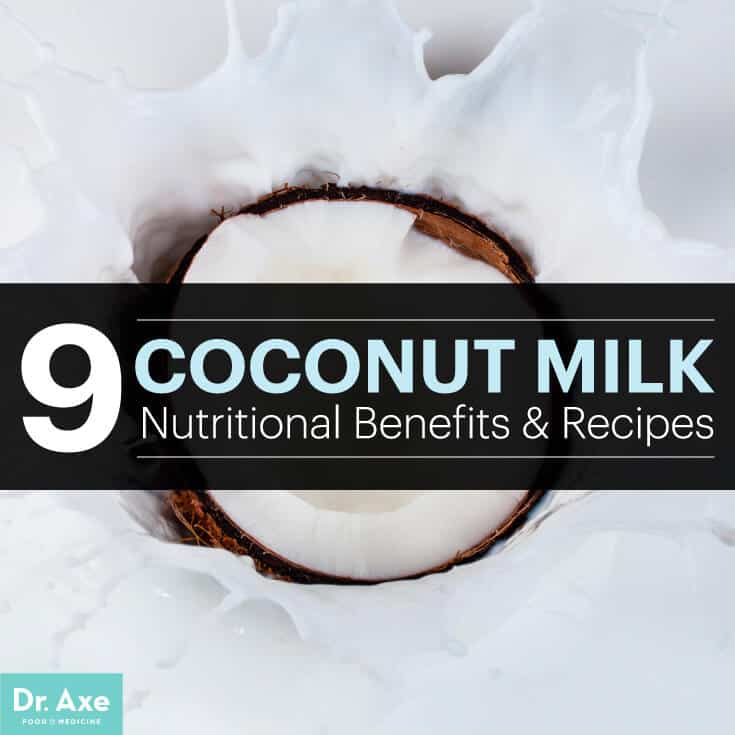
9 Coconut Milk Nutritional Benefits & Recipes
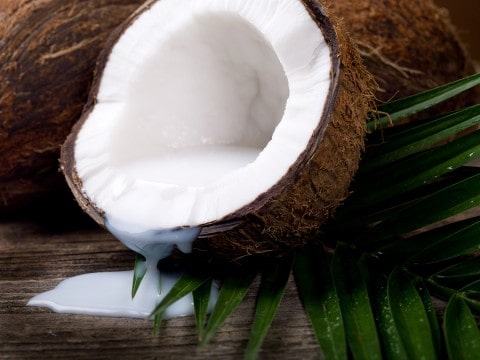
coconut milk

With its creamy texture and slight natural sweetness, coconut milk might taste like something that should be bad for you, yet it’s anything but. Coconut milk is often considered a “miracle liquid” since coconut milk nutrition offers great ability to build up the body’s immune defenses and prevent disease. Coconut milk, along with it’s relatives coconut oil and coconut water are among the world’s healthiest foods.

What exactly is coconut milk, and how is it made? Coconut milk isn’t actually “milk” at all (in the sense that you normally think of it) — it’s a liquid naturally found inside of mature coconuts, stored within coconut “meat.” When you crack open a fresh coconut, the milky white substance that leaks out is natural coconut water, but when you blend coconut meat and then strain it, the result in a thicker coconut “milk.”


How do the two differ? As a coconut matures, more of the water inside is replaced with coconut meat, so mature coconuts tend to be better producers of coconut milk, while younger coconuts (around five–seven months) are the best producers of coconut water. Coconut water is higher in sugar and certain electrolytes, while coconut milk is higher in healthy saturated fatty acids (from coconut oil) and calories.

Coconut Milk Nutrition Facts
coconut milk
source
In addition to providing nutrients and its awesome taste, coconut milk contains beneficial fat called lauric acid, a medium-chain fatty acid that’s easily absorbed and used by the body for energy. Coconuts’ fatty acids are primarily saturated fats, but dont think these will raise your cholesterol levels and cause heart damage. Instead, they’re known to actually do the opposite — coconut milk can help you lower cholesterol levels, improve blood pressure, and prevent heart attacks or a stroke.

Since real, full-fat coconut milk is high in calories, it’s better to have a smaller serving than you would of regular milk or coconut water. About 1/4–1/2 cup at once is best, either as part of recipes (for example as “coconut whipped cream”) or on its own combined with other flavors (such as in a smoothie).

Full-fat coconut milk contains all of its natural fatty acids, while “light” coconut milks are strained to remove some of the fat, which creates a thinner, lower-calorie milk. Because coconut milk is completely free from dairy, lactose, soy, nuts or grains, it’s a good option for anyone allergic to dairy and nut- or grain-based milks, plus it’s vegan and good for plant-based eaters.

Coconut Milk Nutrition
coconut milk nutrition facts
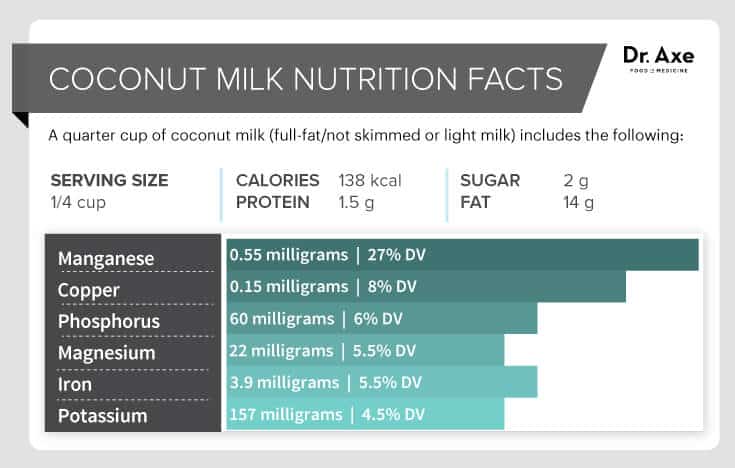
A quarter cup of coconut milk (full-fat/not skimmed or light milk) has about: 

  • 138 calories
  • 1.5 grams protein
  • 2 grams sugar
  • 14 grams fat
  • .55 milligrams manganese (27 percent DV)
  • .15 milligrams copper (8 percent DV)
  • 60 milligrams phosphorus (6 percent DV)
  • 22 milligrams magnesium (5.5 percent DV)
  • 3.9 milligrams iron (5.5 percent DV)
  • 157 milligrams potassium (4.5 percent DV)

Health Benefits of Coconut Milk
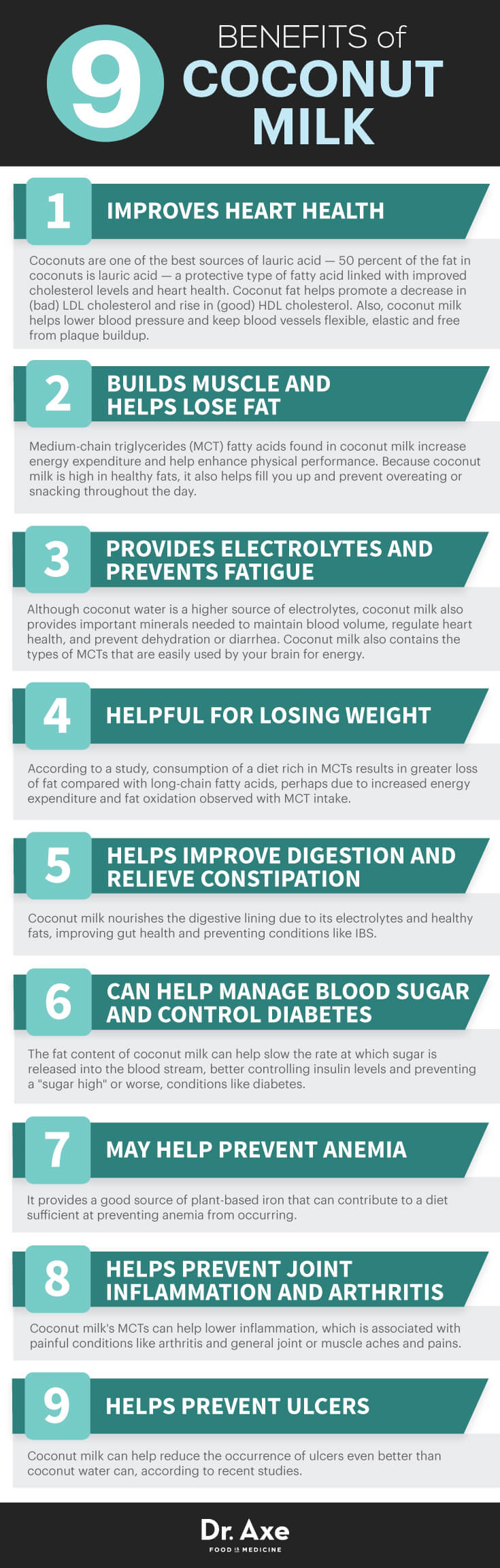
1. Improves Heart Health by Lowering Blood Pressure and Cholesterol
Coconuts are one of the best sources of lauric acid — 50 percent of the fat in coconuts is lauric acid, which has antibacterial and antiviral activities. According to many studies, lauric acid is a protective type of fatty acid linked with improved cholesterol levels and heart health.

For example, when 60 healthy volunteers were given coconut milk porridge (CMP) for five days a week for eight weeks, researchers found that their low density lipoprotein (LDL) levels decreased while their “good” high density lipoprotein (HDL) levels rose significantly. They concluded that “coconut fat in the form of coconut milk does not cause a detrimental effect on the lipid profile in the general population, and in fact is beneficial due to the decrease in LDL and rise in HDL cholesterol.” 

Because coconuts contain minerals important for circulation and controlling blood flow, coconut milk is also useful for lowering blood pressure and keeping blood vessels flexible, elastic and free from plaque buildup. For example, magnesium may help combat stress and muscle tension while aiding in circulation and keeping muscles relaxed, important for preventing heart attacks.

2. Builds Muscle and Helps Lose Fat
Studies find that medium-chain triglycerides (MCT) fatty acids found in coconut milk increase energy expenditure and help enhance physical performance. Following exercise, muscles also need plenty of nutrients — including electrolytes like magnesium and potassium that are found in coconut milk — to repair broken down tissue and grow back even stronger.

Because coconut milk is high in healthy fats, it also helps fill you up and prevent overeating or snacking throughout the day, which derail your efforts to improve your body composition.

3. Provides Electrolytes and Prevents Fatigue
Although coconut water is a higher source of electrolytes, coconut milk also provides important minerals needed to maintain blood volume, regulate heart health, and prevent dehydration or diarrhea. Especially in very hot weather, following exercise or after being sick, electrolytes help prevent exhaustion, heat strokes, heart problems, muscle aches or cramps, and low immunity.

Coconut milk also contains the types of MCTs that are easily used by your brain for energy, without even needing to be processed through your digestive tract with bile acids like some other fats. Coconut milk’s calories provide a quick and efficient source of healthy calories for the brain, which is actually primarily made up of fat and relies on a steady stream of it to function.

4. Helps Lose Weight
According to a study done by the School of Dietetics and Human Nutrition at McGill University,

consumption of a diet rich in MCTs results in greater loss of fat (adipose tissue) compared with long-chain fatty acids, perhaps due to increased energy expenditure and fat oxidation observed with MCT intake. MCTs may be considered as agents that aid in the prevention of obesity or potentially stimulate weight loss. 

As a food high in MCTs, coconut milk is a very filling, fat-burning food. Fats provide the feeling of being full and satisfied and can help prevent overeating, snacking, food cravings and potentially weight gain.

Of course, portion control is important considering the calorie count of coconut milk, but as a part of a healthy diet it provides necessary fatty acids in addition to other minerals that support weight loss and detoxification. Coconut milk is also hydrating and helps the digestive organs, like the liver and kidneys, function properly, which helps metabolize fat and remove waste from the body.

5. Improves Digestion and Relieves Constipation
A well-hydrated digestive tract is important for preventing or treating constipation. Coconut milk nourishes the digestive lining due to its electrolytes and healthy fats, improving gut health and preventing conditions like IBS.

6. Manages Blood Sugar and Controls Diabetes
The fat content of coconut milk can help slow the rate at which sugar is released into the bloodstream, better controlling insulin levels and preventing a “sugar high” or worse, conditions like diabetes. This is one reason why coconut milk is especially good to add to sweetened recipes, like desserts. Coconut milk’s MCTs are also a preferred source of energy for the body rather than sugar.

7. Helps Prevent Anemia
Although the iron content of coconut milk isn’t very high, it still provides a good source of plant-based iron that can contribute to a diet sufficient at preventing anemia.

8. Prevents Joint Inflammation and Arthritis
Coconut milk’s MCTs can help lower inflammation, which is associated with painful conditions like arthritis and general joint or muscle aches and pains. Coconut milk in place of refined sugar especially is helpful for people with arthritis (or other autoimmune conditions) because sugar is a pro-inflammatory and linked to low immunity, worsened pain and swelling.

9. Prevents Ulcers
Another benefit of coconut milk nutrition that may surprise you? Researchers found that coconut milk can help reduce the occurrence of ulcers even better than coconut water. When rats with ulcers were given coconut milk, they experienced a reduction in the size of ulcers of about 56  percent. The study found that coconut milk had protective effects on the ulcerated gastric mucus that can lead to painful ulcers. 
Coconut milk benefits
13 Health Benefits of Coconut


15 Benefits Coconut For Health We Need To Know

8 Reasons Why You Should Eat More Coconut

Wednesday, 14 December 2016

10 Impressive Health Benefits of Coconut Oil

Coconut oil is one of the few foods that can be classified as a “superfood.”
Its benefits include weight loss, better brain function, skin health and many more.
Here are 10 impressive health benefits of coconut oil.

1. Coconut Oil Contains Fatty Acids With Powerful Medicinal Properties

Woman Holding a Cracked Coconut
soure
Coconut oil has been demonized in the past because it contains saturated fat.                                                                                                                                                                             In fact, coconut oil is one of the richest sources of saturated fat known to man, with almost 90% of the fatty acids in it being saturated.
However, new data is showing that saturated fats are mostly harmless. Many studies with hundreds of thousands of people have found no link to heart disease .
Additionally, coconut oil doesn’t contain your average saturated fats, like the ones you would find in cheese or steak.
They contain Medium Chain Triglycerides (MCTs) – which are fatty acids of a medium length.
Most of the fatty acids in the diet are long-chain fatty acids, but the medium-chain fatty acids in coconut oil are metabolized differently.
They go straight to the liver from the digestive tract, where they are used as a quick source of energy or turned into so-called ketones, which can have therapeutic effects on brain disorders like epilepsy and Alzheimer’s.
Bottom Line: Coconut oil contains a lot of medium chain triglycerides, which are metabolized differently and can have therapeutic effects on several brain disorders.

2. Populations That Eat a Lot of Coconut Oil Are Healthy

Girl Eating Coconut
soure
Coconut is an exotic food in the Western world, primarily consumed by health conscious people.
However, in some parts of the world, coconut is a dietary staple that people have thrived on for many generations.
The best example of such a population is the Tokelauans, which live in the South Pacific.
They eat over 60% of their calories from coconuts and are the biggest consumers of saturated fat in the world.
These people are in great health, with no evidence of heart disease.
Another example of a population that eats a lot of coconut and remains in excellent health is the Kitavans .
Bottom Line: Plenty of populations around the world have thrived for multiple generations eating massive amounts of coconut fat.

3. Coconut Oil Can Help You Burn More Fat

Coconuts
soure
Obesity is currently one of the biggest health problems in the world.
While some people think obesity is only a matter of calories, others (myself included) believe that the sources of those calories are important too.
It is a fact that different foods affect our bodies and hormones in different ways. In this regard, a calorie is not a calorie.
The medium-chain triglycerides (MCTs) in coconut oil can increase how many calories you burn compared to the same amount of other fats .
One study found that 15-30 grams of MCTs per day increased 24 hour energy expenditure by 5%, totalling about 120 calories per day .
Bottom Line: The medium chain triglycerides in coconut oil have been shown to increase calories burned over 24 hours by as much as 5%, potentially leading to significant weight loss over the long term.

4. Coconut Oil Can Kill Harmful Microorganisms

Running Away From Pathogens
Almost 50% of the fatty acids in coconut oil is the 12-carbon Lauric Acid.
When lauric acid is digested, it forms a substance called monolaurin.
Both lauric acid and monolaurin can kill harmful pathogens like bacteria, viruses and fungi.
For example, these substances have been shown to kill the bacteria Staphylococcus Aureus (a very dangerous pathogen) and the yeast Candida Albicans, a common source of yeast infections in humans .
Bottom Line: The fatty acids and breakdown products in coconut oil can kill harmful pathogens, potentially helping to prevent infections.

5. Coconut Oil Can Reduce Your Hunger, Helping You Eat Less

Man Drinking From Coconut
source
One interesting feature of coconut oil is that it can reduce your hunger.
This may be related to the way the fatty acids in it are metabolized, because ketones can have an appetite reducing effect .
In one study, varying amounts of medium and long chain triglycerides were fed to 6 healthy men.
The men eating the most MCTs ate 256 fewer calories per day, on average .
Another study in 14 healthy men discovered that those who ate the most MCTs at breakfast ate fewer calories at lunch .
These studies were small and only done for a short period of time. If this effect were to persist over the long term, it could have a dramatic influence on body weight over a period of several years.
Bottom Line: The fatty acids in coconut oil can significantly reduce appetite, which may positively affect body weight over the long term.

6. The Fatty Acids in Coconut Oil Are Turned into Ketones, Which Can Reduce Seizures

Open Coconut
source
A so-called ketogenic (very low carb, very high fat) diet is currently being studied to treat various disorders.
The best known therapeutic application of this diet is treating drug-resistant epilepsy in children .
This diet involves eating very little carbohydrates and large amounts of fat, leading to greatly increased concentrations of ketones in the blood.
For some reason, this diet can dramatically reduce the rate of seizures in epileptic children, even those who haven’t had success with multiple different types of drugs.
Because the MCTs in coconut oil get shipped to the liver and turned into ketones, they are often used in epileptic patients to induce ketosis while allowing for a bit more carbs in the diet .
Bottom Line: The MCTs in coconut oil can increase blood concentration of ketone bodies, which can help reduce seizures in epileptic children.

7. Coconut Oil Can Improve Blood Cholesterol Levels

Cracked Coconut
source
Coconut oil contains healthy saturated fats.
The saturated fats in coconut oil may increase “good” HDL cholesterol in your body, but also help convert the “bad” LDL cholesterol into a less harmful form.
Coconut oil may also improve other risk factors and therefore protect against heart disease.
In one study in 40 women, coconut oil reduced Total and LDL cholesterol while increasing HDL compared to soybean oil .
There are also rat studies showing that coconut oil reduces triglycerides, total and LDL cholesterol, increases HDL and improves blood coagulation factors and antioxidant status .
Bottom Line: Studies in both humans and rats show that coconut oil improves important risk factors like Total, LDL and HDL cholesterol, which may translate to a reduced risk of heart disease.

8. Coconut Oil Can Protect Hair Against Damage, Moisturize Skin and Function as Sunscreen

Cracked Coconut With Peels
source
Coconut oil can serve various purposes that have nothing to do with eating it.
Many people are using it for cosmetic purposes and to improve the health and appearance of their skin and hair.
Studies on individuals with dry skin show that coconut oil can improve the moisture and fat content of the skin .
Coconut oil can also be very protective against hair damage and one study shows effectiveness as sunscreen, blocking about 20% of the sun’s ultraviolet rays 
Another application is using it like mouthwash in a process called oil pulling, which can kill some of the harmful bacteria in the mouth, improve dental health and reduce bad breath.
Bottom Line: Coconut oil can be applied topically as well, studies showing it to be effective as a skin moisturizer and protecting against hair damage. It can also be used as a mild form of sunscreen and as mouthwash.

9. The Fatty Acids in Coconut Oil Can Boost Brain Function in Alzheimer’s Patients

Doctor With Thumbs Up
source
Alzheimer’s disease is the most common cause of dementia worldwide and occurs primarily in elderly individuals.
In Alzheimer’s patients, there appears to be a reduced ability to use carbs for energy in certain parts of the brain.
Researchers have speculated that ketones can provide an alternative energy source for these malfunctioning brain cells and reduce symptoms of Alzheimer’s .
In one 2006 study, consumption of medium chain triglycerides led to immediate improvement in brain function in patients with milder forms of Alzheimer’s .
Other studies support these findings and medium chain triglycerides are being intensively studied as potential therapeutic agents in Alzheimer’s disease .
Bottom Line: Studies show that the fatty acids in coconut oil can increase blood levels of ketones, supplying energy for the brain cells of Alzheimer’s patients and relieving symptoms.

10. Coconut Oil Can Help You Lose Fat, Especially The Harmful Abdominal Fat

A man who needs to lose weight
source
Given that coconut oil can reduce appetite and increase fat burning, it makes sense that it can also help you lose weight.
Coconut oil appears to be especially effective at reducing belly fat, which lodges in the abdominal cavity and around organs.
This is the most dangerous fat of all and is highly associated with many chronic diseases.
Waist circumference is easily measured and is a great marker for the amount of fat in the abdominal cavity.
In a study in 40 women with abdominal obesity, supplementing with 30 mL (2 tablespoons) of coconut oil per day led to a significant reduction in both BMI and waist circumference in a period of 12 weeks .
Another study in 20 obese males noted a reduction in waist circumference of 2.86 cm (1.1 inches) after 4 weeks of 30 mL (2 tablespoons) of coconut oil per day .
This number may not seem too impressive on the surface, but be aware that these people aren’t adding exercise or restricting calories. They’re losing significant amounts of belly fat simply by adding coconut oil to their diet.
You can read more about the weight loss effects of coconut oil in this article.

Not All Coconut Oil Is the Same

In order to enjoy the health benefits outlined in the article, then you must get organic, virgin coconut oil, not the refined stuff.
I personally cook almost everything I eat in coconut oil and my health has never been better.