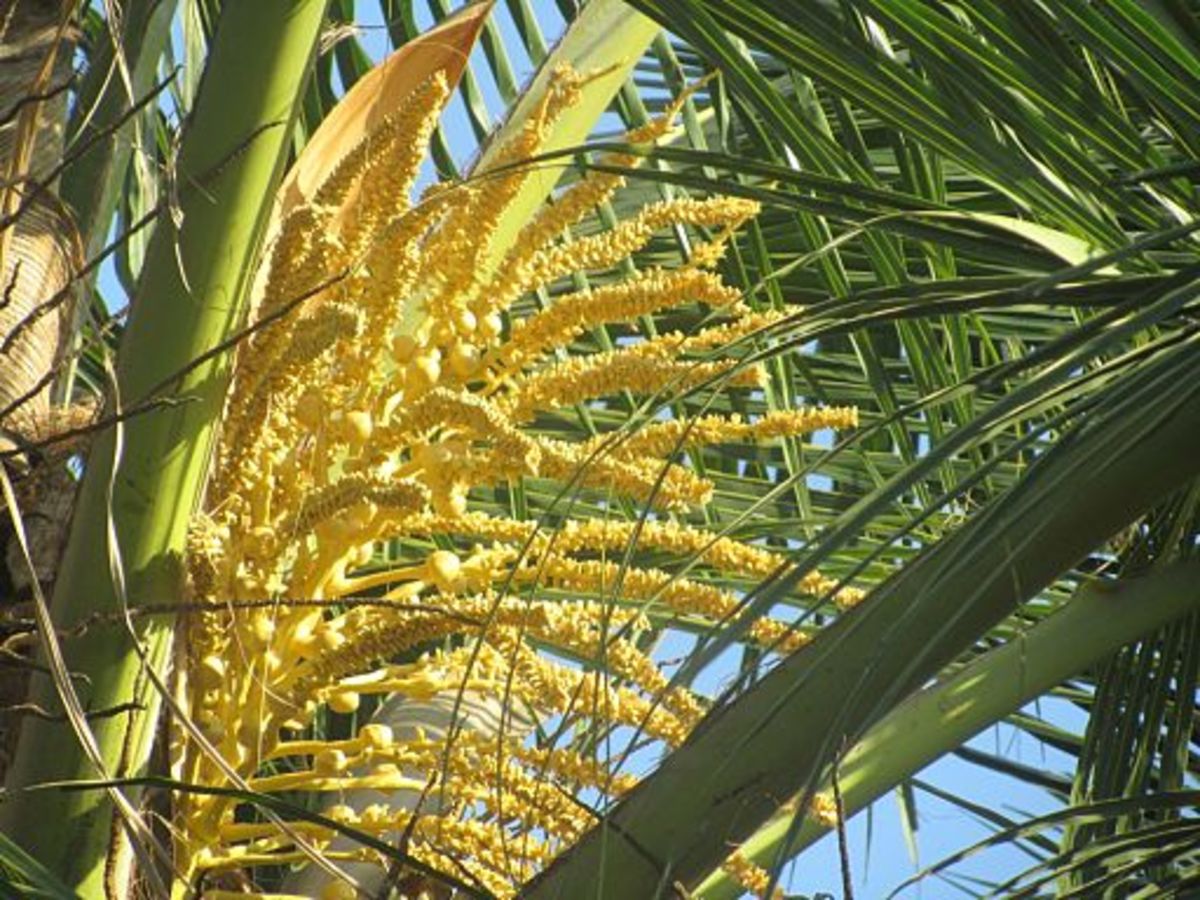
A:Coconut trees offer many uses, including forming houses
and roofs, appearing in foods and beverages and landscaping. Coconut trees,
like many other tree species, serve aesthetic and functional purposes. These
trees grow in tropical and subtropical climates around the world, providing
many uses as a chemical, skin product and food source for people around the
world. Coconut trees derive from the palm family, which includes many species
of trees and plants. Coconut trees distinguish themselves as hardy species,
surviving in tough climates with little water and high levels of salt. People
use virtually every part of the coconut tree, including the fibers, juices,
outer bark and fronds. Tree trunks serve industrial uses, making popular
choices as housing materials and structural supports. The durable wood appears
in some furniture and interior decorative items too. The tough fibers of
coconut wood make it an ideal building material, while strong leaves create
baskets and form decorations. Coconuts, the fruits produced by trees, provide
food and nutrition. Coconut seeds make coconut oil, butter and margarine. The
fleshy white meat of coconut fruits sweetens desserts and confections in dried
or raw form. Landscapers plant trees along city streets and walkways. These
attractive trees provide aesthetic value and anchor soil, protecting against
erosion.
Different Uses for a Coconut
Coconut Bird Feeder
The Tree of Life
The coconut has got to be the most versatile fruit used.
Grown on the Palm Tree, every part of the coconut and the tree has virtually
got a use and has been used by different countries in different ways. Known as
“The Tree of Life” in The Philippines and “The tree of a 1,000 uses” in the
Malaya language, coconuts have a history of important uses worldwide.
Grown in over 80 countries worldwide, the coconut palm
excels in the tropics, notably The Philippines and Indonesia closely followed
by India and Brazil which combined, account for approximately 80% of the
world’s coconut production.
The coconut is of significant economic importance to these
top producers.
Here is a selection of the many uses of this exotic fruit
tree which I have divided into parts of the Tree and then the fruit.
Attempting to list every single use would be impossible
however I can give you a taste of just how amazing and functional coconut is.
The Roots – were used to make dyes, used as a toothbrush,
mouthwash, and has medicinal value.
Coconut Leaves – were used in The Maldives as a roofing
material for houses, and are used to wrap rice, for cooking, and for storage in
The Philippines.
They have been used to make toys in India, and they are used
to make brooms and burnt to ash to make lime.
Toothpicks and satay skewers have also been made out of the
ribs on the leaves.
Coconut Tree Trunk – used as timber to make houses and
boats, in bridge building, furniture, drums, and canoes.
Coconuts are a serious superfood with its long list of
health benefits, medicinal uses, and nutritional value.
No part goes to the waste as every layer has or had a use
somewhere in the world, making it worthy of the title the tree of life.
The Coir – this is the fiber on the outside of the husk and
is used in ropes, doormats, potting compost, mattress stuffing, brushes, mats,
rugs, joint sealer for boats (caulking), and sacks.
In Brazil, a tea is made from the husk fibers which is said
to benefit inflammatory disorders.
The Coconut Husk & Shell – the outer part of the
coconut, these have been used for buffing floors, fuel, for charcoal, as
handicrafts, as buttons, as drinking vessels, sponges, musical instruments,
theatrical sound effects, burnt to ward off mosquitoes and when ground down,
the husk is used in cosmetics as a skin exfoliant.
The coconut shells are also used as bird feeders, a haven
for small birds and rodents and even are a feature in the fairground as a
coconut shy.
Commonly drunk in the humid tropics, coconuts all produce
water. The younger the fruit, the more water it has.
A good source of sugar, fibre, antioxidants, proteins,
vitamins and minerals makes it a popular sports drink providing energy,
hydration, and endurance.
It helps restore any electrolyte imbalances caused by
diarrhea, vomiting and after exercising.
Emergency infusions may be done with coconut water due to
its ability to mix with blood.
It has antiseptic, antibacterial, anti-fungal, and
anti-viral properties.
It is used to replace lost fluids in cases of influenza,
typhoid, malaria, and dissolves kidney stones.
Coconut Oil
With medicinal, nutritional and topical uses and benefits,
there are in excess of 100 reasons to have coconut oil in some form in the
home. Here is a selection of them. Here we go!
The milk of the coconut is extracted from the flesh or meat
of the fruit has high saturated fat content. It is used in a variety of ways
from seafood dishes in Brazil to being used in baking instead of animal fat.
Whilst there are two types of milk (thick and thin milk)
available, most countries who import coconut milk get it in a can and remain
unaware of the two different types.
Coconut milk is used regularly, nearly as a staple
ingredient in Southeast Asia and forms the base of curries.
Used to make a home brew in Rendell Island (Solomon Islands)
where it is fermented with sugar and yeast and left for a week.
The famous Pina Colada cocktail traditionally contains
coconut milk.
A Crash Course on Coconuts: See How the World Uses this
Fruit
You have probably heard me praise the benefits of coconut
oil and coconut water. Studies about their health benefits are piling up as we
speak. Coconuts carry have a variety of functions beyond just these two
products.
However, these functions and benefits seem to be largely
overlooked in the United States. Americans have very limited knowledge about
this fruit because it is not a traditional part of their diet. And very few
stores sell coconut products.
The term "coconut" can be used to refer to both
the coconut palm and fruit. Every part of the coconut can be used for myriads
of functions, so it has gained significant recognition and has become a steady
source of living in many cultures.
Coconut Uses - How the Coconut Proved Its Worth
The physical properties and nutrients of coconuts can vary
depending on their maturity. Young coconuts have either a white husk or a green
shell, and possess larger amounts of coconut water and softer meat. On the
other hand, mature coconuts, the brown and hairy variety, have less water and
firmer meat.
Whether they're young or mature, coconuts are considered the
"plant of life" due to their astounding commercial and domestic uses:
1.Parts of the coconut palm, as well as the exterior layers of
its fruit, are turned into several products, from simple kitchen tools and
utensils to strong structures – for both humans and animals. Some of these
coconut parts include:
Coconut husks
Coconut shells
Coconut leaves
Coconut trunk
Coconut roots
2.The meat and water within its fruit are rich resources of
nutrients. Native cultures in Asia, Pacific Islands, South America, and limited
parts of North America use coconut fruit as a staple in their diets. Some
popular coconut products are:
Coconut meat
Coconut oil
Coconut milk
Coconut water
Coconut wine
Coconut vinegar
Go Nuts about Coconuts - Learn More about This Amazing Plant
Probably no fruit or plant has garnered the level of
recognition the coconut has. The list of benefits you can obtain from coconuts
goes on and on.
I urge you to read Plant of Life: An Infographic on Various
Coconut Uses to discover some interesting trivia about its uses around the
world. Share this infographic with your friends and family to help spread
knowledge about this astounding plant.
Coconuts are exotic, edible fruits produced in coconut
trees. The coconut tree is a kind of palm tree with a single straight trunk and
has been used for many purposes since prehistoric times.
Every part has a use, including the fruits, wood, and leaves.
Because of this, the trees are widely cultivated in many
places in South India for both commercial and home use.
Here, you can see few uses of these wonderful trees.
This is the first use most people think of. You can eat the
fruit of a coconut tree, and this is the plant's most common use. Coconuts can
be eaten either raw or cooked, and they are rich in vitamins, minerals, and
powerful antioxidants.
Before you can eat coconut, the white flesh of the fruit
needs to be separated from the outer hard shell. Do do this, you may use a
coconut scraper to grate the fruit or a coconut meat removal knife to separate
the flesh after opening the shell. The freshly grated coconuts can be easily
added to your recipes or you can store it in refrigerator for few days.
Coconut milk is also very popular. It is widely used in many
Asian cuisines, especially in South India, Sri Lanka, and Thailand. It is
usually used to thicken soups and stews, and you can also use it as a
substitute for milk if you have milk allergy. To make coconut milk, you can
either squeeze grated coconuts in water with your hands (this produces a milder
version), or you can stick them in a blender with a little water (this produces
a thicker version).
Additionally, coconut milk is an excellent hair conditioner.
You can apply the coconut milk to your hair and scalp and rinse after a few
minutes. This will make your hair soft and shiny and improves the health of
hair by reducing hair fall. Coconut milk is also an ideal ingredient to be
added in homemade face masks in place of water.
The fruits can also be turned into coconut flour, which is
available in markets nowadays. The flour is often used as a gluten-free
substitute.
Coconut water is different from coconut milk. When you break
the hard shell to open the fruit, it has a mildly sweet water inside that is
known for its extreme health benefits. This wonderful natural drink is very
popular during the summer season.
The water from young, tender coconuts is sweeter and has the
best flavor.
3. The Oil: For Cooking, Skin, and Hair
Coconut oil can be used for baking and as a conditioner. | Source
Coconut oil is quite popular nowadays due to its unique,
attractive flavor. It is even used as a replacement for butter in many recipes.
This oil has a higher saturated fat content than oils such as olive or canola,
so its impact on health is a controversial subject. The lauric acid in coconut
oil is believed to be excellent for health due to the fact that it improves the
immunity and can protect against several illnesses.
Coconut oil is not just for cooking. It is a great
conditioner for hair, too. The use of coconut oil in hair can make dry hair
soft and silky. In many parts of the world, it is very common to massage young
babies with coconut oil since it is believed to be healthy for the skin of
babies.
The hard shell of the fruit is useful, too. It is
traditionally used in homes to steam food. The shells are also a popular craft
material. Many beautiful craft items are made out of coconut shells. You can
easily color the shells and carve them into beautiful art pieces. Children use
them for playing as well.
5. The Husks: A Natural Scrubber and Craft Material
There are a number of uses for the coconut husk. They can be
used as natural scrubbers to clean dinner plates, cups, and other vessels and
even the floor.
Coconut husks are also used as a craft material to create
many beautiful things. For example, you can color it and use it as hair for
dolls.
This is one of the major uses of coconuts, at least for the
many people who make a living with it. People in many rural areas make their
living from making ropes out of coconut husk, and it is a profitable business.
This is actually a difficult task and requires immense manual labor. However
people work in large groups in coir factories to make ropes and mats from the
husks of coconuts.
So far we have seen the uses of just the fruit of this versatile plant. Now we will see the uses of other parts of this wonderful tree!
The leaves of the coconut palms are very large and
beautiful. I love how they look; they are great subjects for photography.
People have used these leaves to make fences as well as
roofs for their small huts, and in many places, people still use them for
thatching. They are cost effective and provide shelter for many people who
cannot afford the cost of other materials. Sometimes they are used not only for
making the roofs, but to make the walls of houses as well. Making houses from
the palm leaves may not be the best option—they can't survive extreme weather
conditions and there are safety conceerns—but in many places, people rely on
this tree to create shelter.
And coconut leaves aren't only helpful for humans. Did you
know that coconut leaves are one of the favorite foods of elephants?
Coconut leaves have thick sticks that can be used to make
brooms for your home! It is really easy to assemble the sticks together and tie
them with a thread to make the broom. People make the coconut brooms for both
domestic and commercial use.
9. The Wood: Fires in Traditional Kitchens
Many parts of the coconut tree can serve as inexpensive fuel for fires. | Source
Coconut husks, shells, leaves, leaf stems, and flower stems
are used for fires in traditional kitchens. In places with many coconut trees,
finding the wood for fire is an easy an inexpensive task.